Blog Updates

Subscribe to my blog updates and receive new blog posts directly into you inbox.

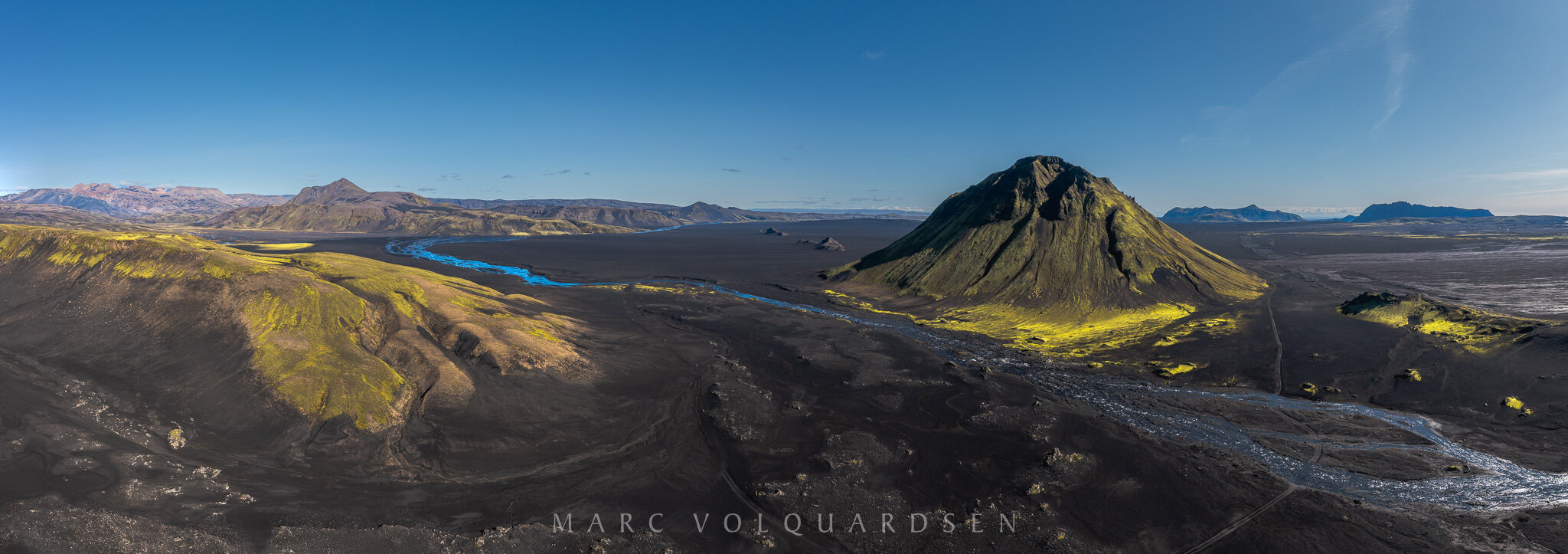
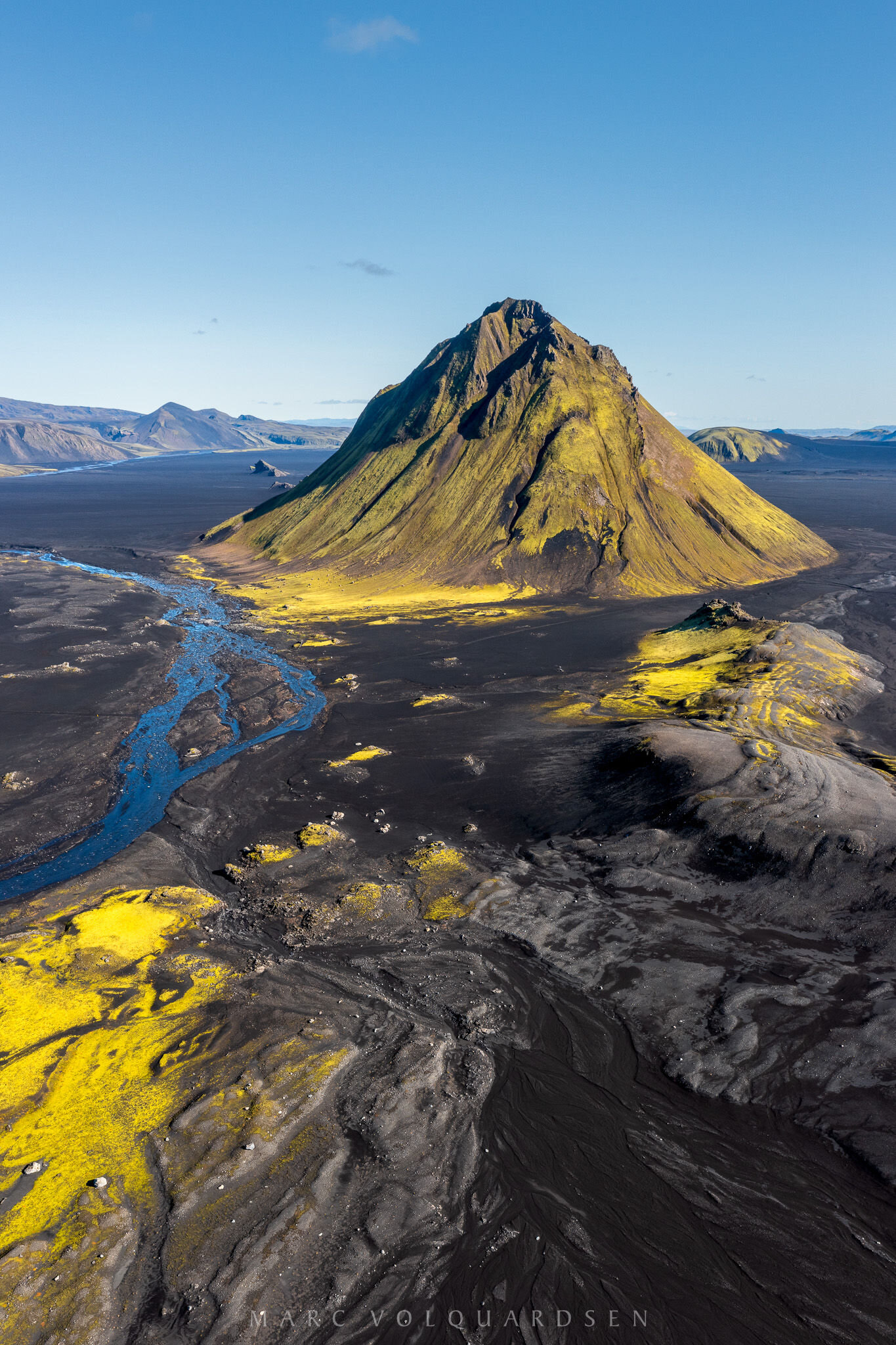
Mælifell & Brennivínskvísl, one of the headwaters of Holmsá

Mælifell and Brennivínskvísl

| 1 IMAGE IN THE BLOG POST | 2 Comments

It’s so nice to let your gaze wander along the river. Just leave Mælifell to the right, see how the blue sky is reflected in the river and how the river then turns to the right to run along the mountain range to Holmsá.

To the right of Mælifell you can see the large alluvial plain, which is repeatedly flooded by Mýrdalsjökull.

Mælifell Cone in the black Mælifellsander

Mælifell!

| 1 IMAGE IN THE BLOG POST | No Comments

Mælifell is the most frequently photographed volcanic cone in the Icelandic highlands. Why is that?

There are certainly a few reasons. Its striking symmetry. Its almost complete moss cover, in contrast to the black sander from which it rises. In fact, you drive across this plain for a long time before you reach Mælifell. It erupted over 10,000 years ago, at a time when most of the highlands were completely covered in ice. This is probably the reason for the uniform shape of the subglacial volcano.

Especially when it had previously rained so that the moss is saturated, and then the sun makes the mountain shine, you get this great motif.

I was lucky that day in the highlands and opted for drone shots because of the rather boring blue sky. This makes its surroundings stand out even better and the moss glows even more!

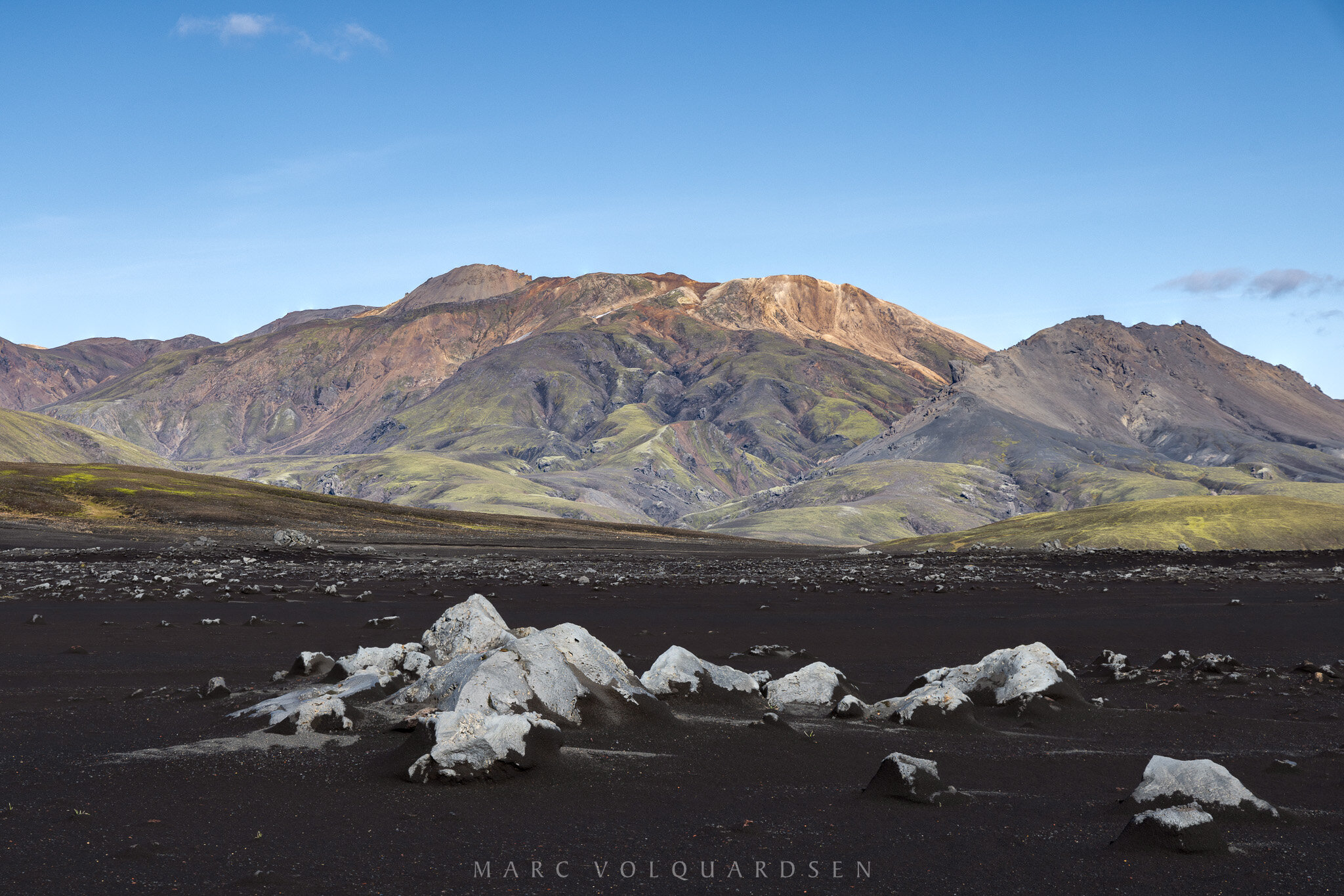
Torfajökull (2801)

Torfajökull & Mælifellssandur

| 1 IMAGE IN THE BLOG POST | 2 Comments

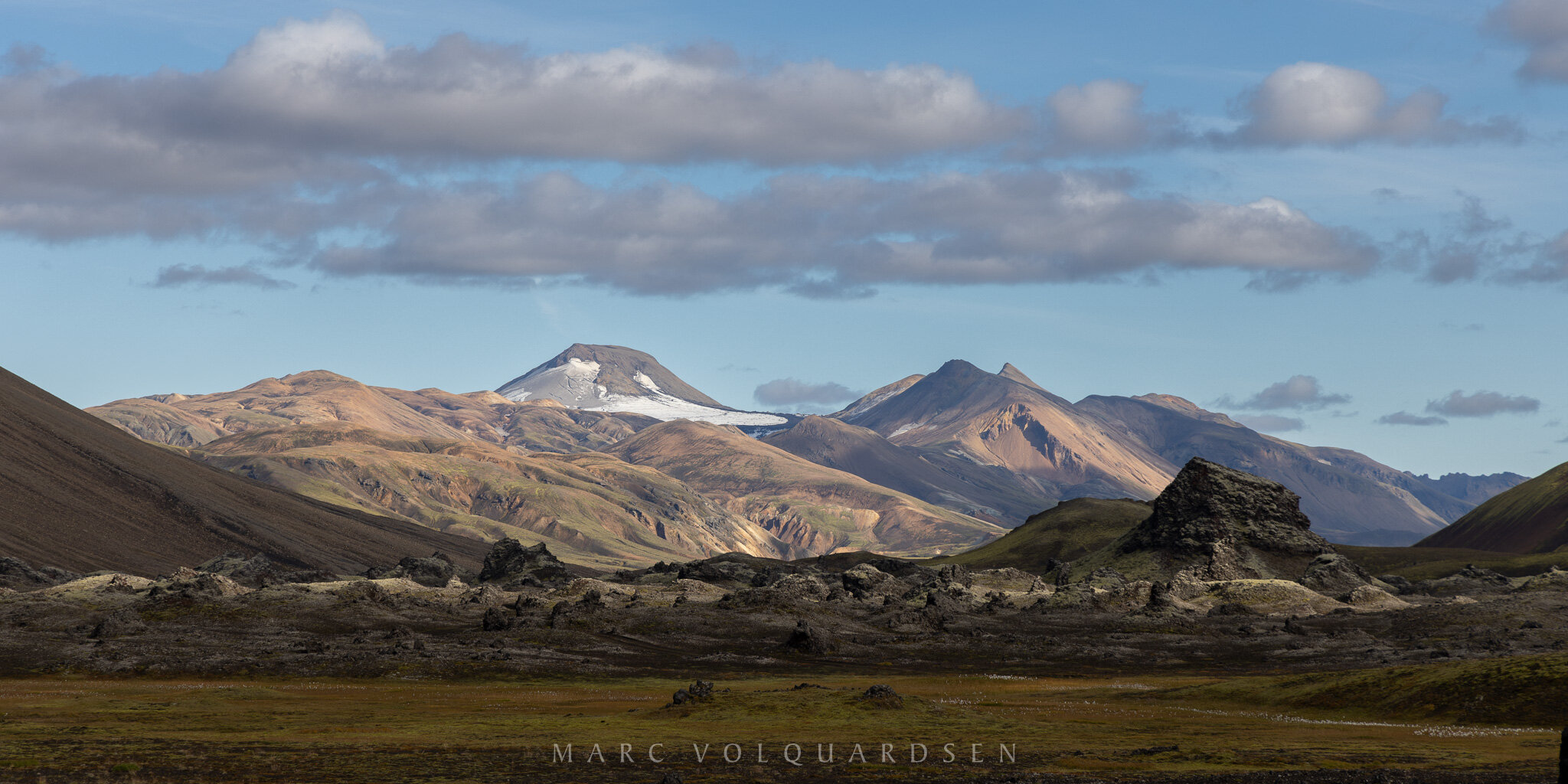
Torfajökull is the large volcano south of Landmannalaugar that is responsible for many rhyolite in the landscape around Landmannalaugar. It was once a subglacial volcano, meaning that it erupted under the ice. Here I look from the black Mælifellssandur up to Torfajökull, a few white stones in the foreground. Brightly lit by the sun, the rhyolite peak shines out at me.

Einhyrningur and Eyjafjallajökull in the background

Einhyrningur & Eyjafjallajökull Glacier

| 1 IMAGE IN THE BLOG POST | No Comments

The unicorn rock, »Einhyrningur« in Icelandic. Two years earlier, I had already photographed it in completely different weather, and the sun had only come out for a brief moment. This year was completely different. It was a cloudless day in the highlands, and we could already see the glacier shining to the south of us as we drove along the banks of the Markafljót river.

We had a really great view. Einhyrningur in the foreground, the riverbed of Markafljót running through the picture from left to right and the glacier tongues of Eyjafjallajökull behind it. From this perspective, the old crater rim of Einhyrningur can be seen very clearly and at the same time it can be recognized that today’s mountain is the stump of the cooled lava in the volcanic vent.

Varmá ford at the western end of Laki Crater (with permission of Vatnajökull National Park)

Varmá River and the western Laki Crater

| 2 IMAGES IN THE BLOG POST | No Comments

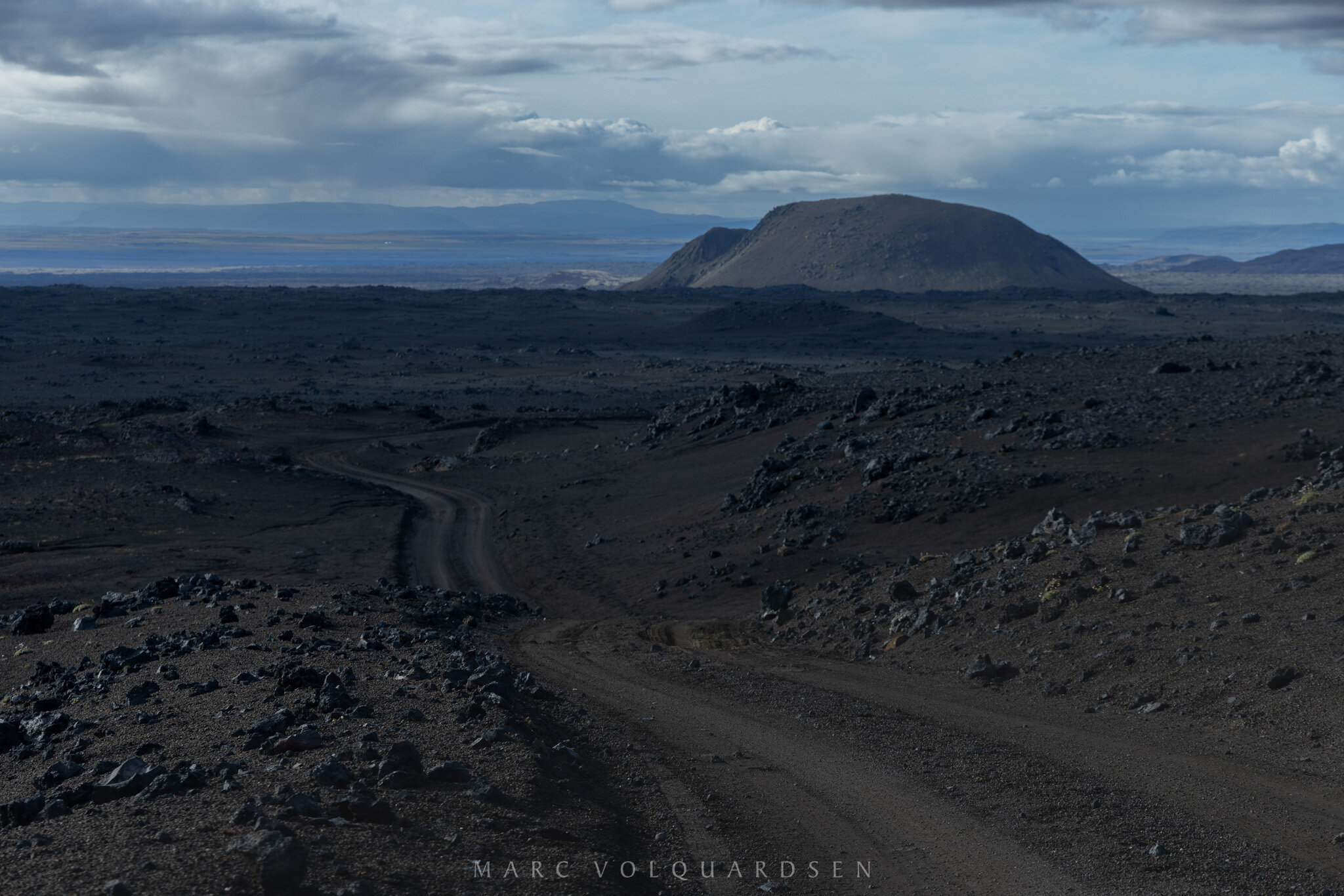
The ford of the Varmá River is very special because you first have to drive through a narrow, partly flooded channel in the volcanic rock before you cross the actual river. The river is crossed near the western end of the Laki craters, the F‑road passes through the row of craters shortly afterwards and then runs for long stretches through the lava field of the western Laki craters.

You can see this better in the second picture, where you view the craters from bottom right to top left and behind them the vast lava field. At the same time, the great structure of the water landscape of the Varmá comes into its own. read more or write a comment …

Tjarnagígur in the western Laki crater row (with permission of Vatnajökull National Park)

Tjarnagígur

| 1 IMAGE IN THE BLOG POST | No Comments

From Laki, you can continue along the F‑road to the west and drive along the crater row of Lakagígar. About halfway along the route, you will pass another parking lot with a ranger station. This is a great place to take a break as there are some tables next to the hut.

The parking lot also offers access to the Tjarnagígur crater, just a few hundred meters away. This crater is the only one in the series that is filled with a lake. The beauty of the lake comes into its own from the elevated perspective. I still had permission to fly the drone here*.

However, you can also clearly see the traces of tourism here, with dark tracks of visitors running through the moss around the crater. For many years, access to the crater has been restricted to one path, partly laid out as a boardwalk. As the moss is still not recovering, attempts are even being made here with moss implants.

For me, it is particularly important that I stick to the rules of the national park. I stay on the signposted paths and only fly the drone where I don’t disturb people or animals and have permission to fly. If you want to know more about ethics in landscape photography, Nature First explains it very well.


* Drone image with permission from Vatnajökull National Park

Mount Laki in Fog (With permission of Vatnajökull National Park)

Mount Laki in Fog

| 2 IMAGES IN THE BLOG POST | No Comments

As we were traveling with a tent, we were able to spend the night at the edge of Vatnajökull National Park or Lakagígar at the Blágil ranger station. Here too, the ranger station was no longer staffed, but there was still access to the hut with a small washroom and toilet. I wanted so much to be at Laki in the morning light.

When we woke up, the landscape around us was shrouded in mist! We quickly packed up the tent after breakfast and were back on the slope to Laki. We arrived at the mountain well before 9 a.m. and the fog was still hanging around us. I was allowed to fly the drone there until 10 a.m. and we were still completely alone.*

What an atmosphere with Mount Laki in the middle of the fog!

The other view over the western row of craters was also mystical and completely different from the day before. read more or write a comment …

1 10 11 12 13 14 15 16 80